
• Launch

Starship IFT-5: SpaceX Succeeds in the Incredible Return to the Launch Pad

Published on 14 October 2024

On the fifth test flight of the giant Starship launcher, the first Super Heavy stage returned to the launch pad, caught on the fly by two mechanical arms. An unprecedented manoeuvre designed to allow rapid reuse.

Starship IFT-5: SpaceX Succeeds in the Incredible Return to the Launch Pad

On Sunday, October 13 in Boca Chica, Texas, SpaceX teams successfully conducted the fifth test flight (IFT-5 for Integrated Flight Test No. 5) of the Starship, the largest launcher in the world, 121 m high and 5000 tons at take-off. Above all, the incredible return manoeuvre to the launch pad of the first Super Heavy stage went as planned.

STARSHIP EPISODE 5

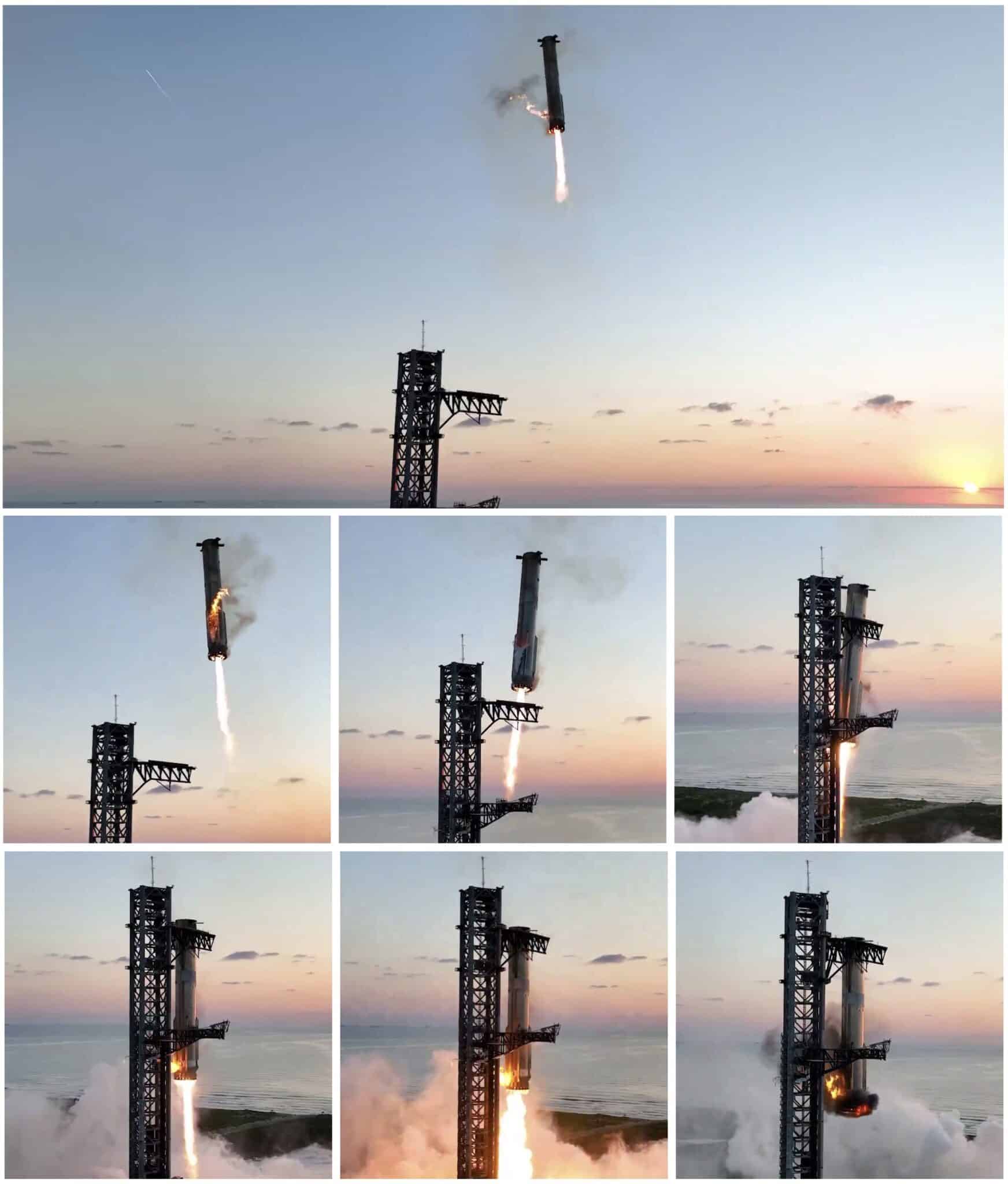
Essentially, IFT-5 repeated the flight plan of the previous test,  IFT-4. Thus, in conclusion, a little more than an hour after take-off, the upper stage (the Starship also called Ship), entered the atmosphere after a partial orbit to land in the Indian Ocean. However, the climax of IFT-5 was undoubtedly the return to the launch pad of the first 71m-high Super Heavy stage. Two minutes and 40 seconds after take-off, at an altitude of about 70 km, this stage separated from the second.

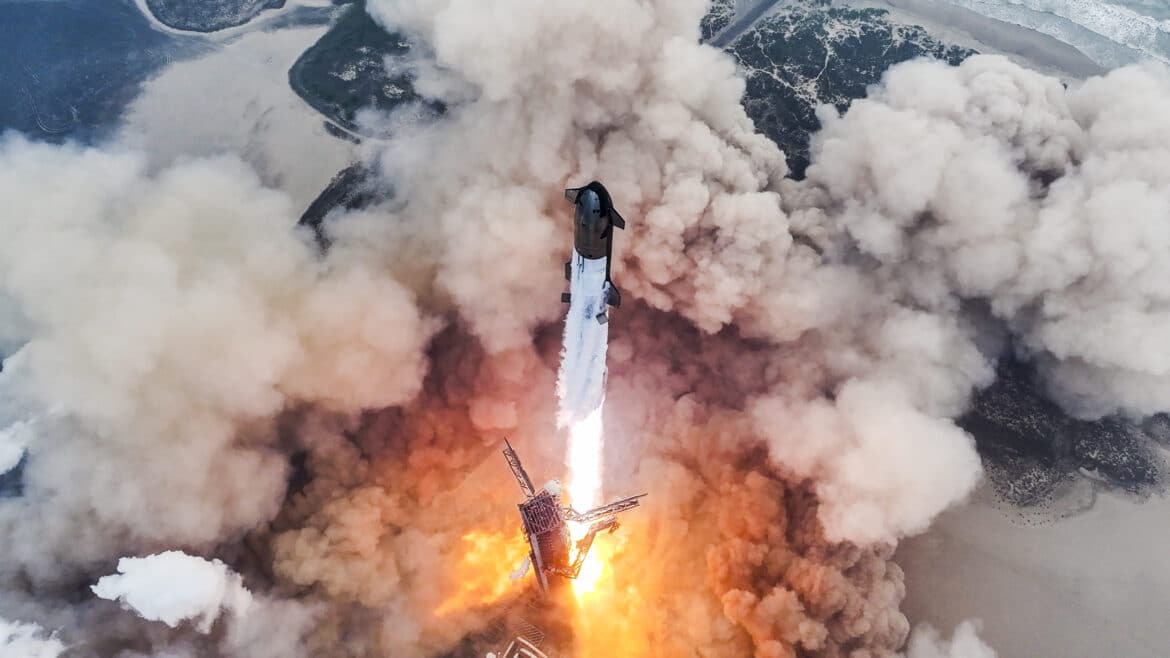
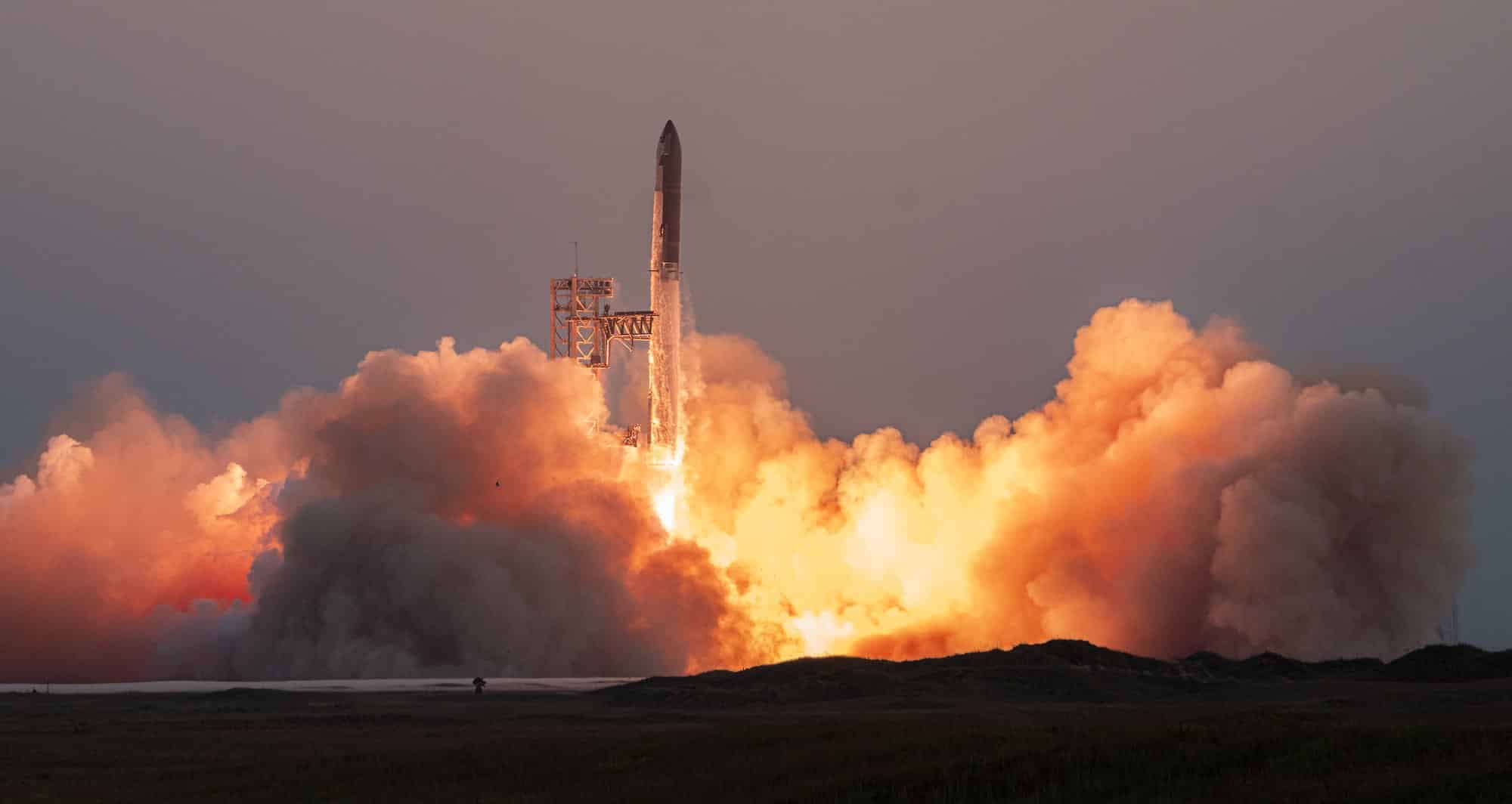
Starship take-off for IFT-5 at 7:25 a.m. on October 13, 2024, local Texas time.
© SpaceX

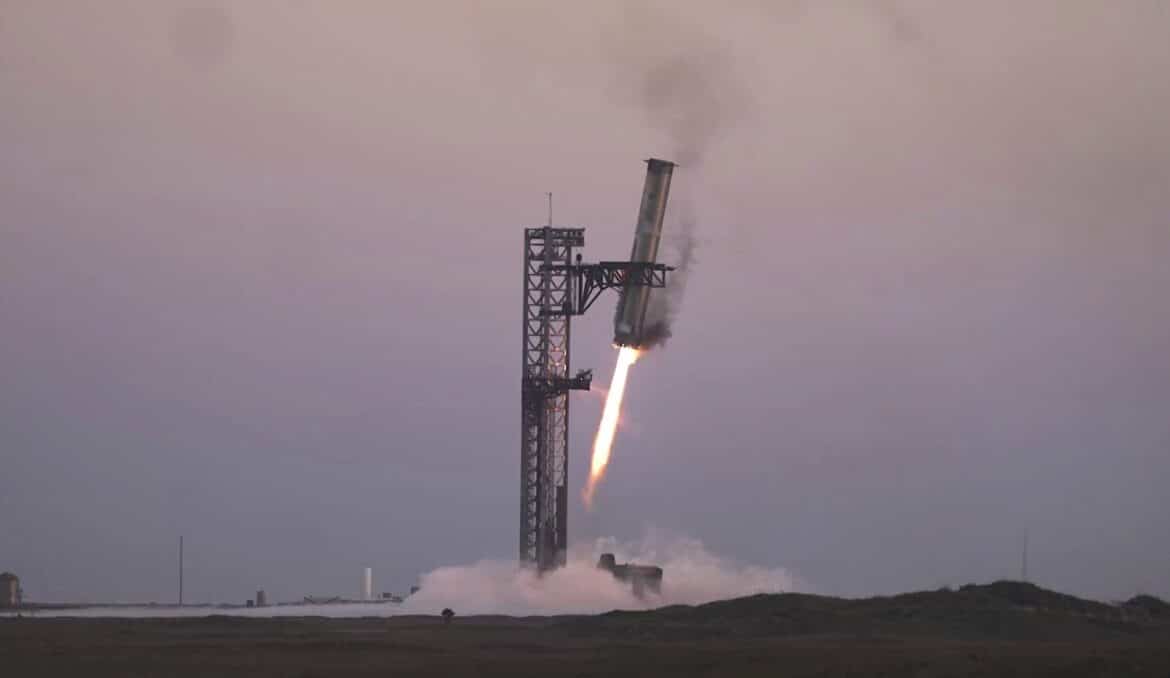
The incredible sequence of the return of the Super Heavy (71m high!), ending its flight in the mechanical arms of the launch tower it had left a few minutes earlier. 

© Cité de l’espace after a SpaceX video

THE FIRST STAGE CAUGHT WITH “CHOPSTICKS”

While for IFT-4, the Super Heavy arrived in the Gulf of Mexico (bordered by SpaceX facilities in Texas), this time it headed towards the launch pad it had left just a few minutes earlier. 

The return speed was quite impressive. Consider that hardly thirty seconds before being seized by the mechanical arms of the shooting range tower, the first stage was still flying at 1000 km/h at an altitude of 1 km!

REVERSE THRUST BRAKING 

Restarting some of the 33 Raptor engines provided the necessary “braking” by reverse thrust as well as the trajectory adjustments to end up as planned in the mechanical arms, nicknamed chopsticks (referring to the chopsticks of Asian cuisine).

The technical feat was particularly praised on the X-network by ESA astronaut Thomas Pesquet as well as NASA administrator Bill Nelson.
FLIGHT FREQUENCY AT THE HEART OF THE STARSHIP SYSTEM

While with its Falcon 9 launcher SpaceX can control the return of a first stage deploying landing legs (but not exactly to the launch pad), this complex solution of mechanical arms is amazing. 

First of all, it has the advantage of no longer having to equip the first Super Heavy stage with landing legs, a significant mass improvement which thus increases the performance of the Starship. 

Above all, the goal clearly announced by SpaceX is to be able to fly a Starship as soon as possible. The first Super Heavy stage being already back on its firing range, it “only” needs to add a second stage to it (the mechanical arms are also used for this lifting function) and fill everything with fuel to take off. After IFT-5, Elon Musk declared that the time between flights was only a few hours

The Starship launch base in Boca Chica, Texas.
© Cité de l’espace after a SpaceX photo

A HIGH FLIGHT FREQUENCY 

ESSENTIAL FOR THE MOON AND OTHER MISSIONS

This type of frequency, unprecedented in space, is potentially at the heart of the Starship system. Indeed, the second stage Ship arrives in Earth orbit with very little fuel and will have to be refuelled for certain mission profiles. A high frequency of flights will then be used for refuelling operations in orbit (an additional technical challenge in the process).

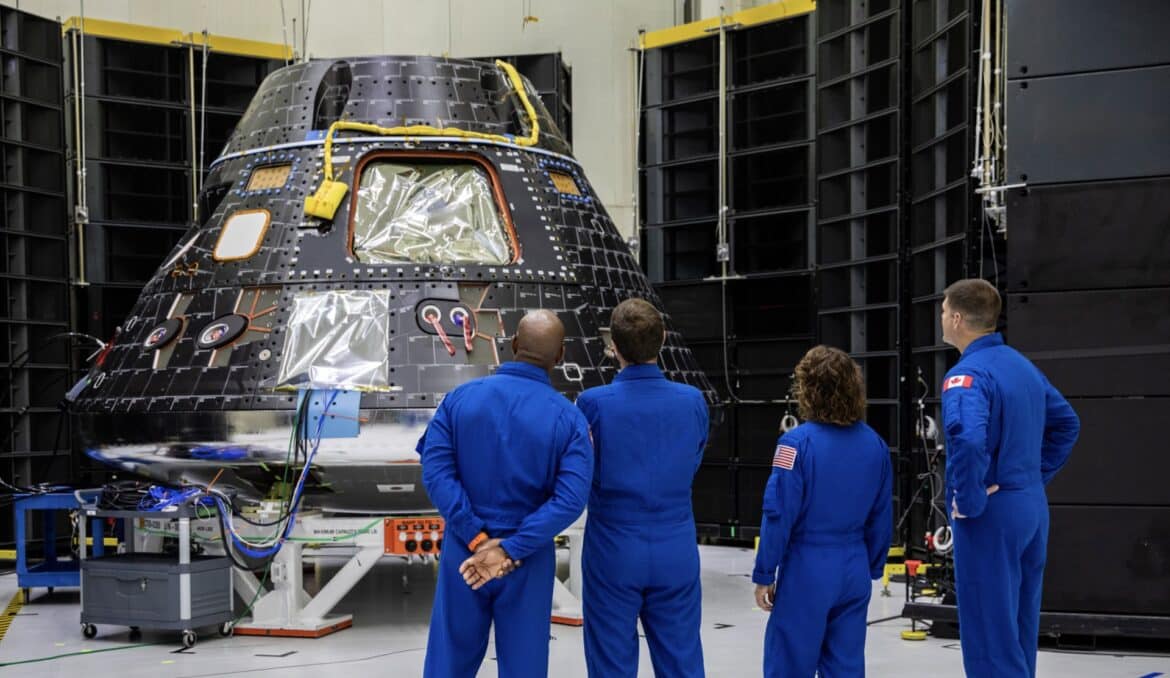
For example, let’s not forget that to carry out its function properly as a lunar lander as part of NASA’s Artemis program, a Starship Moon version will need ten (or more) flights of other Starships in “tanker” version in Earth orbit before leaving for our natural satellite. Remember, with the current architecture, the Starship does not transport astronauts to our celestial neighbour. This round trip takes place aboard the Orion capsule (and its ESA service module) launched by the SLS (Space Launch System).

The return feat accomplished on October 13 must therefore become an operational reality at a steady pace. And that may be an even greater challenge.

Related articles