• Exploration

JUICE Flew Over the Moon and then the Earth

Published on 21 August 2024

Launched in 2023, JUICE successfully flew over the Moon on August 19 and then the Earth the next day in order to change its trajectory. The European probe is expected to reach Jupiter in 2031.

JUICE Flew Over the Moon and then the Earth

It is not only on Earth that fuel savings count… In space, an interplanetary journey can sometimes require so much fuel and oxidiser that the craft becomes too massive for its launcher! But the teams that plan the missions fortunately have a secret weapon: gravitational assistance allowing you to modify a trajectory and speed, consuming next to nothing. Explanations with JUICE.

A SUCCESSFUL FLYBY!

JUICE PASSED 700 KM FROM THE MOON AND THEN 6807 KM FROM OUR PLANET.

This double gravitational assistance manoeuvre (a first for the ESA) changed the trajectory of the European probe which is due to reach Jupiter in 2031. Below are the first photos taken on this occasion.
Below, find our article explaining the principle of this double flyby.

Below, find our article explaining the principle of this double flyby. 

Plus bas, retrouvez notre article qui expliquait le principe de ce double survol. 

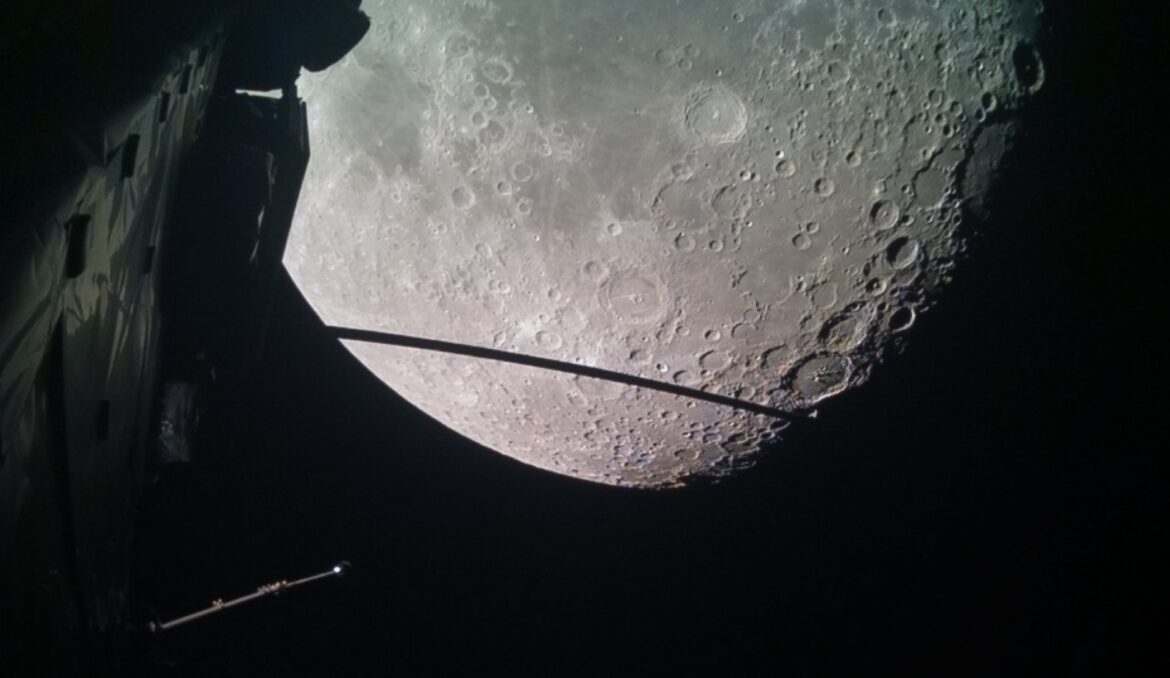
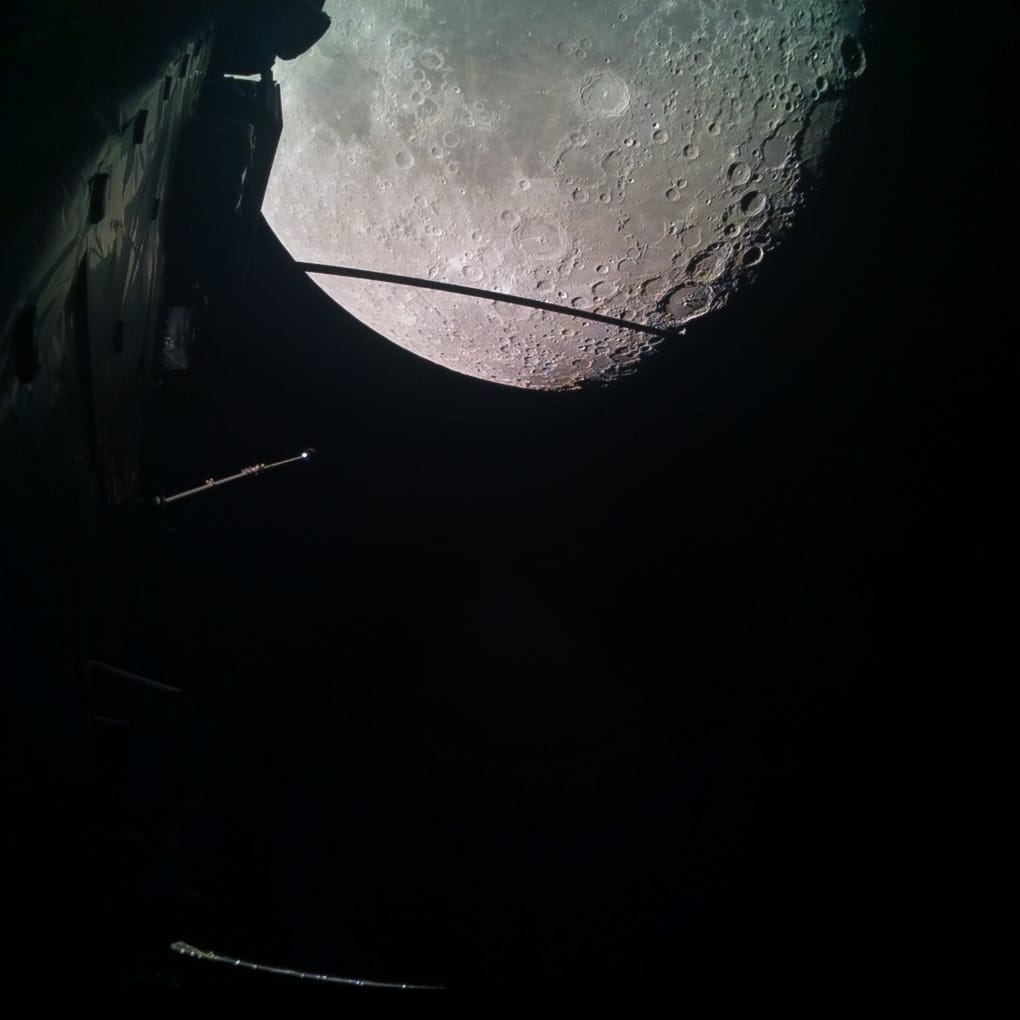
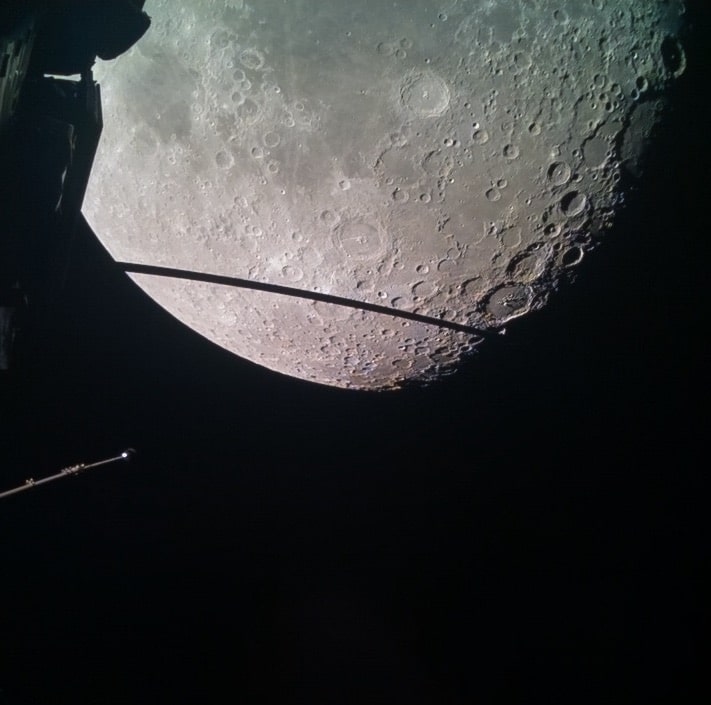
On August 19 at 11:15 p.m., mainland France time, JUICE photographed the Moon for just one minute before moving as close as possible to 700 km.
On the right, part of the probe.
©ESA/JUICE/JMC 

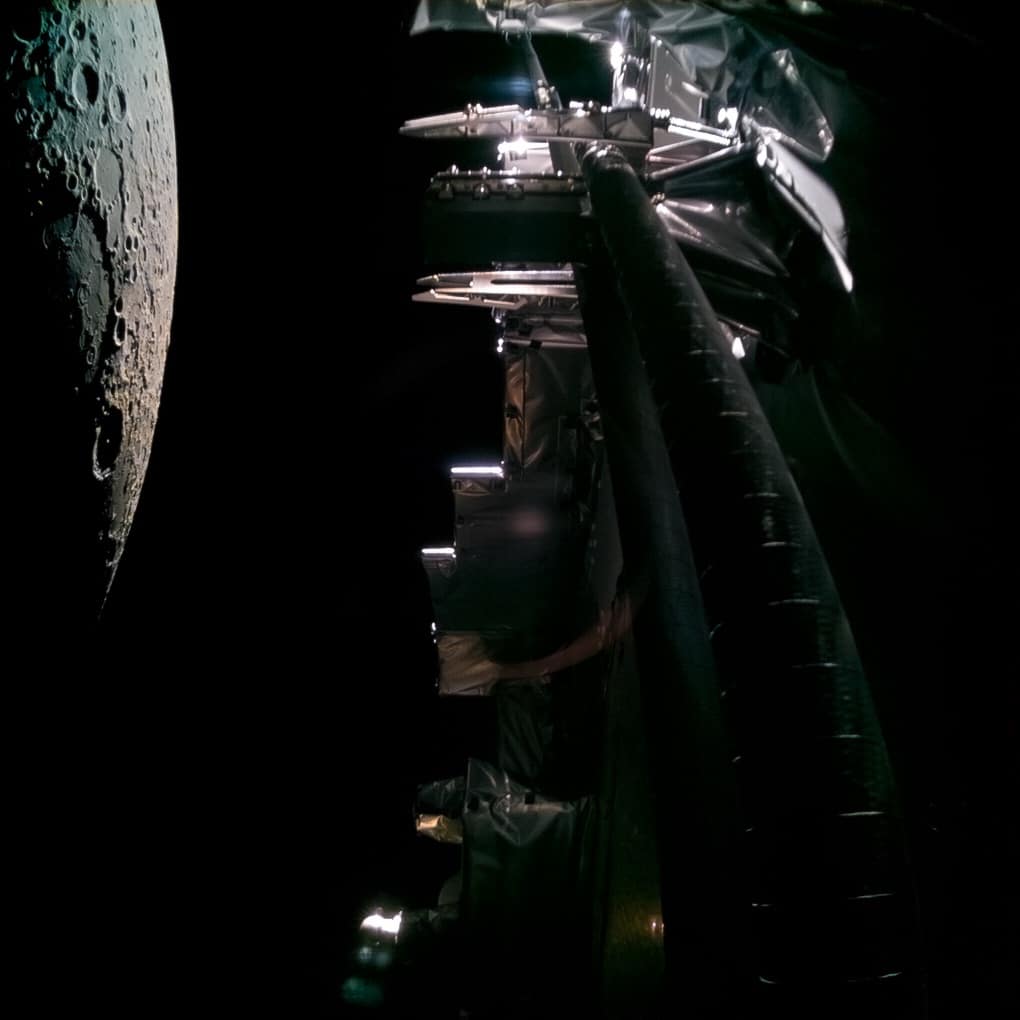
Still August 19, but it’s 11:25 p.m., nine minutes after the closest passage.
Here too, particularly on the left, we can see part of the probe.
©ESA/JUICE/JMC 

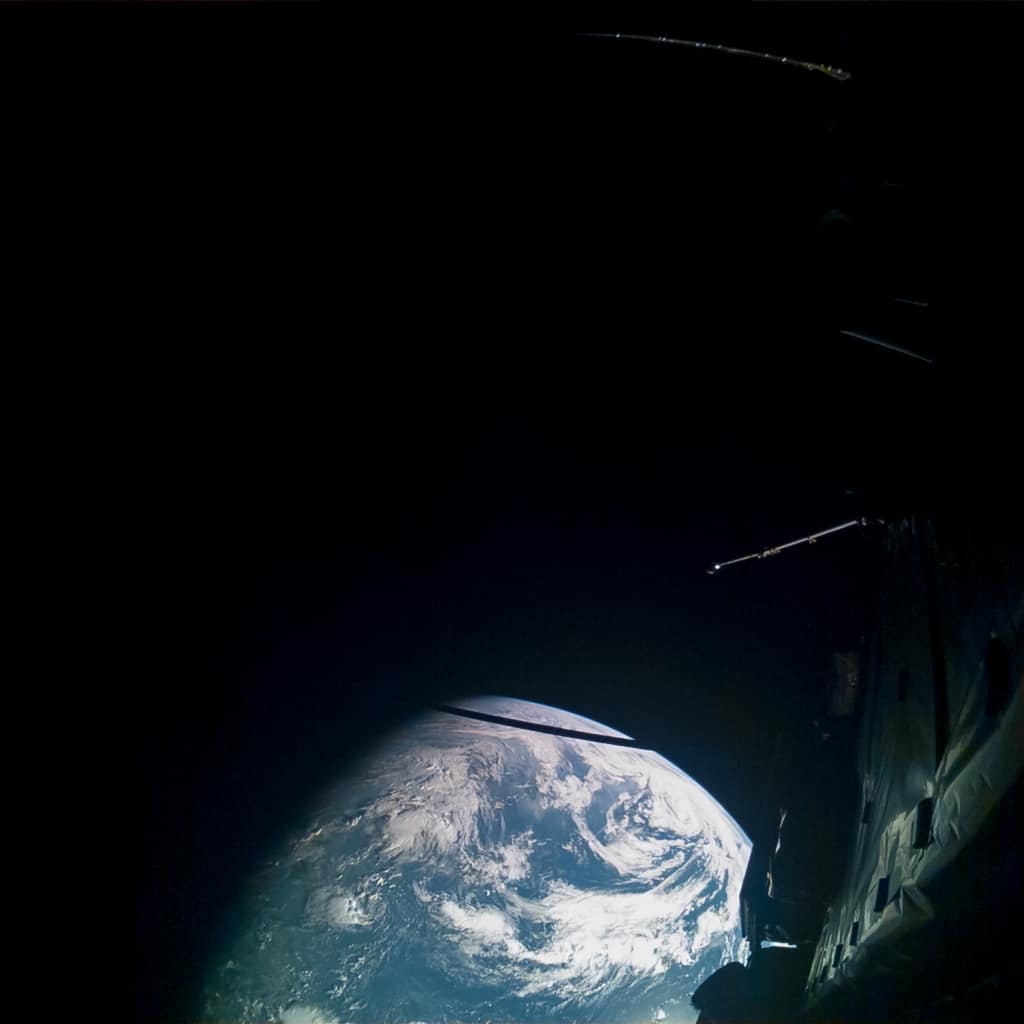
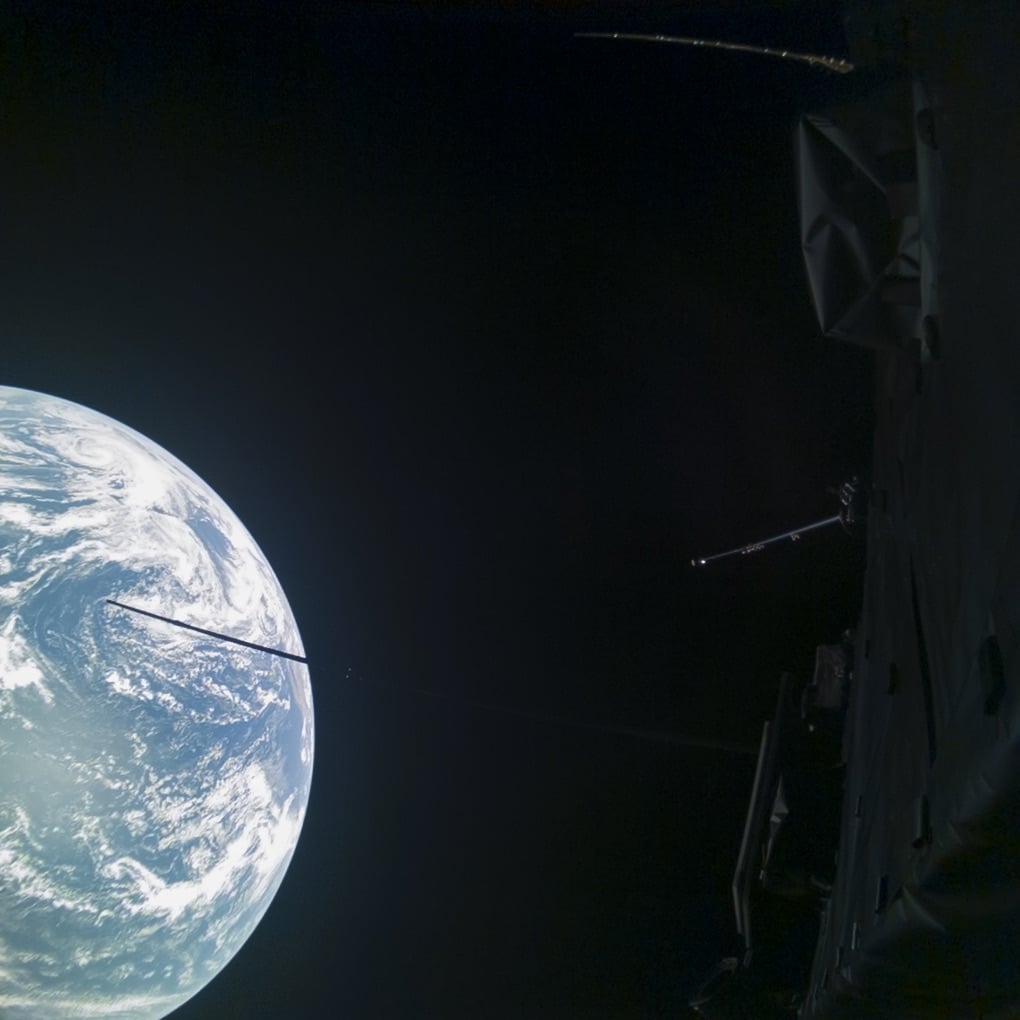
The day after its flyby of the Moon, therefore on August 20, JUICE passed near the Earth this time. This photo was taken at 11:48 p.m., a few minutes before the shortest distance (6807 km).
©ESA/JUICE/JMC 

It is 12:09 a.m., the first minutes of August 21 are ticking by and JUICE is moving away from our planet.
©ESA/JUICE/JMC 

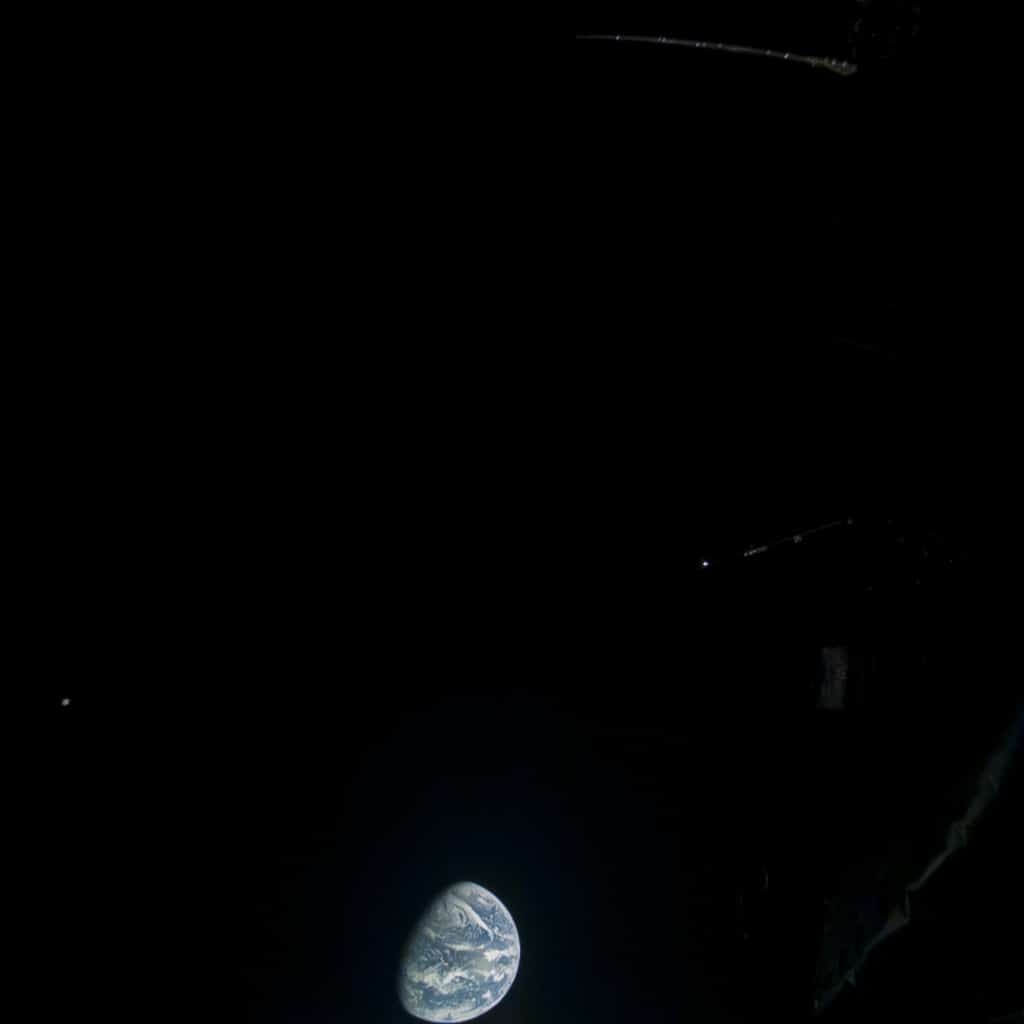
2:53 a.m. on August 21. The nearest overflight of the Earth took place a little less than three hours ago. Our planet is already much smaller in the field of the camera.
©ESA/JUICE/JMC 

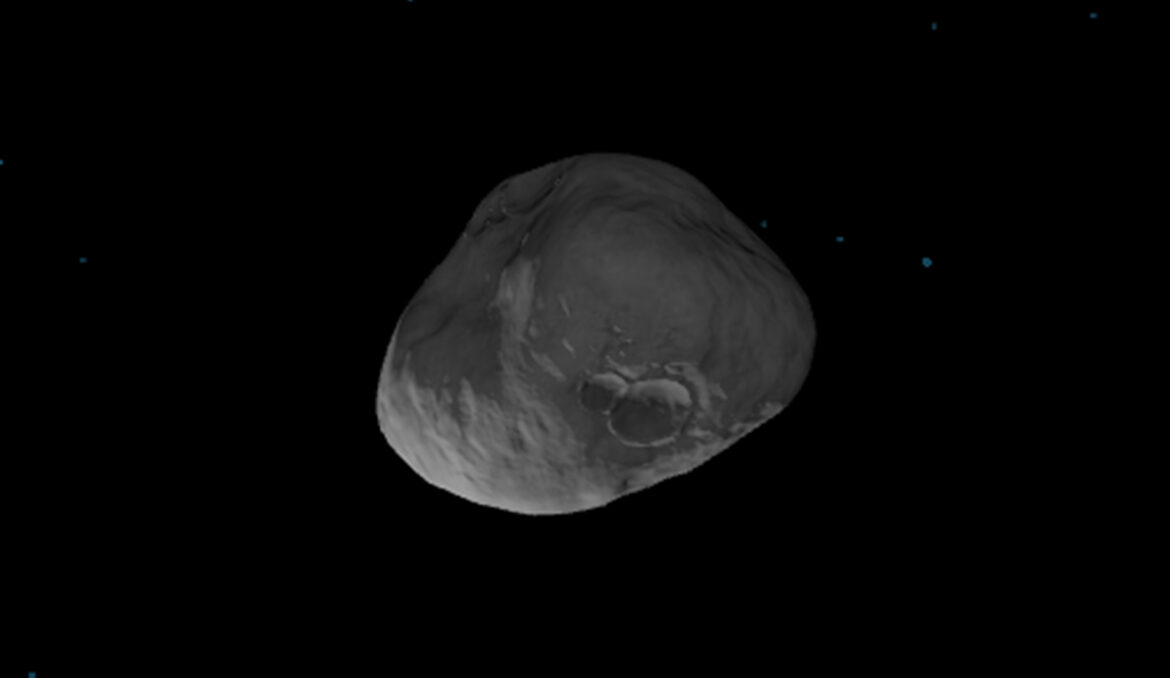
The Earth-Moon duo by JUICE on September 9th 5.7 million kilometres away. Contrast and brightness have been slightly increased compared to the original ESA image.
© ESA/Juice/JANUS (modified by Cité de l’espace)

THE EARTH AND THE MOON BY JUICE

On one of its passages close to the Moon (700 km on August 19), then the Earth (6807 km the next day), JUICE collected the spectacular images shown above and its instruments showed that our planet is habitable (a rehearsal for what it will be required to do for the moons of Jupiter and especially Ganymede). Over the days, the robotic explorer moved away and, on September 9, also took the Earth-Moon duo 5.7 million kilometres from us.

60 TONNES OF FUEL FOR JUPITER? 

YOU DON’T THINK ABOUT IT!

JUICE (JUpiter ICy moons Explorer, explorer of Jupiter’s icy moons) is a probe of the European Space Agency (ESA) that began its journey to the largest planet in the Solar System on April 14, 2023 atop Ariane 5.
ESA explained that to make this trip directly as soon as possible, almost in a “straight line”, it would have been necessary to provide JUICE with 60 tonnes of fuel! Such a take-off mass would have far exceeded the performance of Ariane 5 (or Ariane 6). To make solar system exploration missions possible, teams optimise the trajectories of the probes in order to minimise the use of propulsion, in other words to achieve a reasonable mass of fuel (in fact fuel and oxidiser, or propellant). Of course, it takes more time and in this case, from 2023 JUICE will not reach Jupiter until 2031. But sometimes, a more economical and therefore longer path is not enough: it is necessary to use gravitational assistance as JUICE did on August 19 and 20.

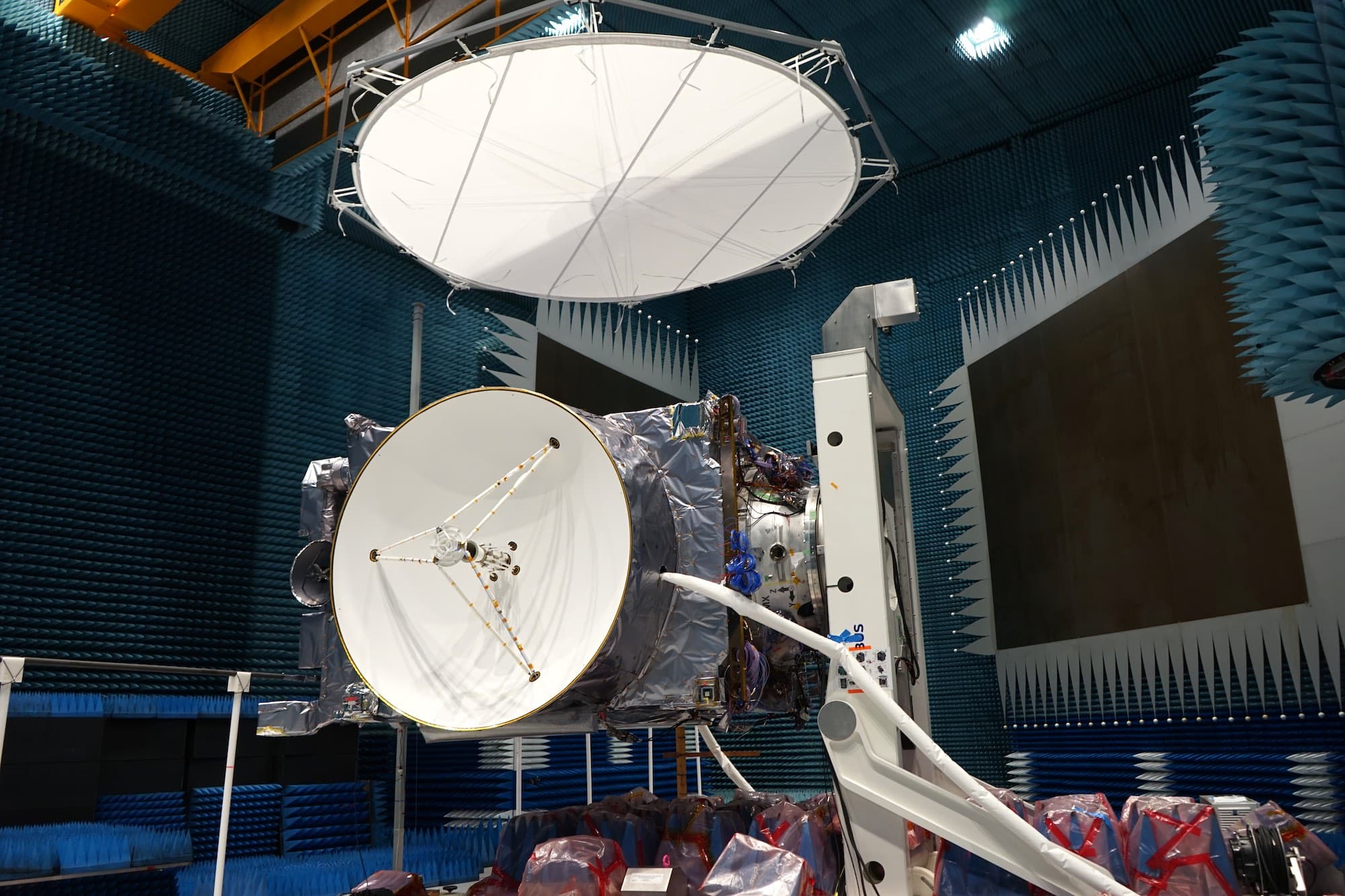
The JUICE probe at Airbus Defence and Space in Toulouse in 2022 for final ground tests before its launch in 2023. 

The total mass at the beginning was six tons, including just over three tons of fuel (fuel and oxidiser). This is far from the sixty tons theoretically necessary (minimum) for a “direct” journey.
© Cité de l’espace/O. Sanguy

Diagram of the double flyover of August 19 and 20, 2024, from ESA illustrations.
© Cité de l’espace from ESA

RENDEZVOUS WITH THE MOON AND THEN THE EARTH 

A SPACE PREMIÈRE

The principle is simple: when a probe approaches a planet, the gravitational field will change the trajectory and even potentially make it possible to gain speed (or lose it according to the needs of the mission). A simple principle, used for decades now, but which requires complex calculations and very precise navigation.

However, for JUICE in the coming days, ESA is aiming for double gravitational assistance with the Moon and then the Earth – a first. So, on August 19, the probe will pass only 700 km from the surface of the Moon (at the closest at 11:16 p.m. French time), then the next day, August 20, 6807 km from our planet (11:57 p.m.). This double flyover will greatly modify JUICE’s path (almost a 90° angle, see the video below) and, counterintuitively, make it lose speed!

BRAKING AND 5-CUSHION BILLIARDS!

This “braking” is the only way for JUICE to head to Venus to fly over the planet in August 2025. There, however, it will gain speed, then accelerate again twice by flying over the Earth in September 2026, then January 2029. This “five-cushion billiards shot” (Moon, Earth, Venus, Earth and Earth) therefore changes trajectory and speed in the desired way without burning fuel. Or more exactly very little, since adjustment manoeuvres are still needed before flyovers. Of course, the expenditure on propellants is negligible in terms of what would have been consumed without gravitational assistance.

ESA video animation illustrating the double Moon and Earth rendezvous of August 19 and 20, 2024.

Related articles